
Hyundai Motor India Ltd (HMIL) said it will increase the prices of vehicles across models by up to 2 per cent to offset rising input costs.

Stiff competition and rising input costs have affected margins and earnings outlook.

The BSE Sensex slumped 456 points on Wednesday, tracking losses in index majors Reliance Industries, Infosys and ICICI Bank as market participants continued to book profits at high levels.

Panasonic India is set to increase the prices of its products by up to 7 per cent, while some others players have already increased it.

India's services sector activities eased in March as growth was hit by the detrimental impact of the coronavirus pandemic and input costs remained elevated, a monthly survey said on Wednesday. The seasonally-adjusted India Services Business Activity Index fell from 55.3 in February to 54.6 in March. Though the rates of expansion softened, it indicated growth for the sixth consecutive month. In PMI parlance, a print above 50 means expansion while a score below 50 denotes contraction.

The company sold about 1,000 trucks last year in special segments like mining, registering a growth of about 20-25 per cent.

Come New Year, cars will be costlier with automakers like Toyota and General Motors on Tuesday saying that they will hike prices by up to three per cent due to rising input costs, while the country's largest car maker Maruti Suzuki India is still evaluating the situation.
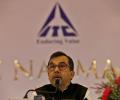
ITC stock slipped over 4 per cent on Thursday (February 8) after British American Tobacco (BAT) said it could sell some of its stake in the company, recovering partially in trade. The stock of the cigarette-to-hotels conglomerate traded at Rs 420 levels, rising 1.3 per cent in intraday deals as compared to the S&P BSE Sensex that traded flat for most part of the day. The development, meanwhile, saw Jefferies downgrade the stock to 'hold' from 'buy' earlier with a target price of Rs 430, down a huge 17.3 per cent from its earlier price target of Rs 520.

India's manufacturing sector continued with its robust performance in November, mainly on the back of substantial easing in price pressures and strengthening demand from clients, a monthly survey said on Friday. The strong performance of the manufacturing sector is expected to continue in 2024 as well. The seasonally adjusted S&P Global India Manufacturing Purchasing Managers' Index (PMI) rose to 56 last month from the eight-month low level of 55.5 recorded in October.

Consumer stocks remain the biggest laggard on the bourses. The Nify50 weighting of FMCG stocks declined to a decade low of 9.9 per cent at the end of March this year, down 150 basis points from 11.4 per cent a year ago. At their peak in March 2013, major FMCG stocks, such as Hindustan Unilever, ITC, and Asian Paints, together accounted for 15 per cent of the Nifty50. But now together with automobile stocks, the consumer goods sector accounts for only 14.7 per cent of the index, down 200 basis points in the past 12 months and 37 per cent from the record high weighting of 23.4 per cent at the end of March 2014.

India's services sector activity eased in August but growth rates for new orders remain elevated, as services firms indicated the sharpest upturn in new export business which acted as a catalyst for firms to expand their workforces as well as output, a monthly survey said on Tuesday. Despite falling from 62.3 in July to 60.1 in August, the seasonally adjusted S&P Global India Services PMI Business Activity Index indicated one of the strongest increases in output seen since mid-2010. For the 25th straight month, the headline figure was above the neutral 50 threshold.

Strong performance by its US subsidiary Novelis and better returns in the copper business helped Hindalco Industries post consolidated revenue growth of 2 per cent quarter-on-quarter (Q-o-Q) to Rs 54,100 crore in the July-September quarter of 2023-23 (Q2FY24). Novelis' Flat Rolled Products (FRP) volumes grew 6 per cent Q-o-Q to 933,000 tonnes (down 5.2 per cent Y-o-Y) on better North American and European volumes. The consolidated earnings before interest, taxes, depreciation, and amortization (EBITDA) declined 2 per cent Q-o-Q to Rs 5,610 crore despite lower input costs in India and better Novelis performance.

'Large-caps are better placed to withstand the impact of higher input cost inflation, rising rates and withdrawal of excess global liquidity.'

State-owned fuel retailers are losing close to Rs 3 per litre on selling diesel while the profit on petrol has trimmed due to recent firming up in international oil prices, industry officials said detailing reasons for continuing to hold retail prices. Indian Oil Corporation (IOC), Bharat Petroleum Corporation Ltd (BPCL) and Hindustan Petroleum Corporation Ltd (HPCL), who control roughly 90 per cent of India's fuel market, 'voluntarily' have not changed petrol, diesel and cooking gas (LPG) prices for almost two years now, resulting in losses when input cost was higher and profits when raw material prices were lower.
Acting as a dampener ahead of the festive season, Maruti Udyog Limited today effected a 0.2-1 per cent price hike in all its models except Swift, due to an increase in input costs including freight costs.

Automakers Maruti Suzuki, Mahindra & Mahindra and Audi India on Monday announced plans to hike prices of their passenger vehicles in January 2024 citing reasons, including cost pressure driven by overall inflation and increased commodity rates. Besides, Tata Motors and Mercedes-Benz India are mulling increasing the prices of their models from January. The country's largest carmaker Maruti Suzuki India, which sells a range of vehicles from entry-level small car Alto to multi-utility vehicle Invicto, priced between Rs 3.54 lakh and Rs 28.42 lakh (ex-showroom Delhi), on Monday said the price hike would vary from model to model.

Corporate India's net profit as a percentage of gross domestic product (GDP) dipped in the 2022-23 financial year (FY23) -- after rebounding sharply in FY22 -- amid a decline in global commodity prices. Top 500 companies' combined net profit stood at 4.1 per cent of the GDP for FY23, down from 4.3 per cent in the previous financial year when it had gone up from just 3.5 per cent in FY21. "The year-on-year (YoY) decline was led by global commodities, which contributed adversely to the ratio, while the financial sector contributed positively.

The German carmaker will hike prices of its best selling cars in Indiafrom February citing increased inputs costs and changes in the exchange rate.

The government is expediting visa-related issues to bring technicians to India from any country, not just China, as and when required, to ensure the smooth implementation of the flagship production-linked incentive (PLI) scheme aimed at boosting domestic manufacturing. "If those under the PLI scheme need to get their equipment installed, we try to expedite the ability to get technicians into India from any country, whichever it may be," Union Commerce and Industry Minister Piyush Goyal told Business Standard in an interview.

Meanwhile, the grand pre-shaadi celebrations continue.

Auto major Mahindra & Mahindra on Friday said it will hike the prices of its passenger cars and commercial vehicles by Rs 6,000 to Rs 20,000 from October 1, partly to offset higher input costs and depreciation of rupee against the dollar.

'There are 725,000 Indians here without proper papers. They are subject to deportation immediately under this (Trump's immigration plan). Immediately!' 'They want to prevent new immigration, get the people who are already here out of here, and only allow population increases in the white population.'

Hyundai Motor India Ltd (HMIL) on Thursday said it will hike prices by up to Rs 20,000 across models, except the newly launched compact car Grand i10, from October 1 to offset the impact of rupee depreciation and rising input costs.

The wholesale price-based inflation spiked to 12.54 per cent in October, mainly due to rise in prices of manufactured products and crude petroleum. WPI inflation has remained in double digit for the seventh consecutive month beginning April. Inflation in September this year was at 10.66 per cent, while in October 2020 it was at 1.31 per cent.
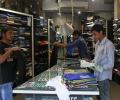
Firms said subdued demand conditions, unfair pricing among competitors and economic woes affected the sector.

A 5% increase is expected due to additional interest on approval costs.

Marking its quickest rise in over seven years, India's services sector activity expanded for the fifth successive month in February, tracking spike in business orders, renewed export demand and strengthening business confidence, a monthly survey showed on Wednesday. The IHS Markit India Services Business Activity Index rose from 55.5 in January to 57.5 in February. This is the fastest expansion in services output since January 2013.

India's services sector activities improved further and expanded at strongest rate in over 11 years in May, supported by a substantial pick-up in new business growth, even as input cost inflation climbed to a record high, a monthly survey said on Friday. The seasonally adjusted S&P Global India Services PMI Business Activity Index jumped to 58.9 in May, up from 57.9 in April, amid better underlying demand and strong inflows of new work. For the tenth straight month, the services sector witnessed an expansion in output.

GDP growth of 7.7 per cent in the first half of this fiscal has "left sceptics gasping and woefully behind the curve", an RBI article said on Wednesday. It also stressed the buildup in the growth momentum is likely to be sustained. The article on the state of the economy published in the Reserve Bank's December Bulletin on Wednesday also said CPI-based retail inflation is expected to ease to 4.6 per cent in the first three quarters of 2024-25 from 5.6 per cent in November.

French auto major Renault on Wednesday said it will increase vehicle prices in India from next month to offset the impact of high input costs.

The coronavirus outbreak has brought a large part of the world's second-largest economy China to a standstill and its impact has been felt across industries.

India's services sector output growth touched a three-month high in November as business inflows rose markedly amid accommodative demand conditions, a monthly survey said on Monday. The seasonally adjusted S&P Global India Services PMI Business Activity Index rose from 55.1 in October to 56.4 in November, indicating a sharp increase in output that was the quickest in three months even amid higher operating expenses. Survey participants linked the latest expansion to demand strength, successful marketing and a sustained upturn in sales.

The company currently sells various vehicle brands in the country ranging from hatchback Spark to sports utility vehicle Captiva, priced between Rs 333,000 and Rs 25.71 lakh (Rs 2.57 million), respectivley, (ex-showroom Delhi).
India's second-biggest carmaker Hyundai Motor India on Thursday said it planned a price hike in April this year due to rising input costs.

Sluggish rise in new business inflows and a cautious approach to costs reportedly led Indian manufacturers to shed jobs in September.

The March quarter (Q4) of the ongoing financial year (FY23) may see cement companies report better financial numbers as input costs ease, pricing action resumes, and cement demand remains firm. While companies have been cautiously optimistic about their outlook, analysts and sector experts remain bullish. In its latest report on the cement sector, brokerage IDBI Capital said that it expected earnings before interest, tax, depreciation, and amortisation (Ebitda) per tonne for cement companies to improve by Rs 200-300 sequentially in Q4.

The National Security Strategy document should flag all major issues concerning security strategy and provide guidelines to concerned departments to work out suitable action plans. Since the global and regional geopolitical canvas is dynamic, the NSS document should be deliberated at length before formulation and should be reviewed periodically, recommends Commodore Venugopal Menon (retd).

S&P Global Ratings on Thursday said about half of the Indian companies that it rates are getting a boost in their core profitability from rupee depreciation. "Much of our rated India corporate portfolio has sizable US-dollar linked revenue and, therefore, is not exposed to rupee depreciation. "This encompasses entities in the IT, metals, and chemicals sectors. About half of the firms we rate are getting an EBITDA boost from currency weakening," the US-based rating agency said in a report.
India's services sector lost momentum in July as demand was curtailed by competitive pressures, elevated inflation and unfavourable weather, a monthly survey said on Wednesday. The seasonally adjusted S&P Global India Services PMI Business Activity Index fell from 59.2 in June to 55.5 in July, pointing to the slowest rate of growth in four months. For the 12th straight month, the services sector witnessed an expansion in output. In Purchasing Managers' Index (PMI) parlance, a print above 50 means expansion while a score below 50 denotes contraction.
